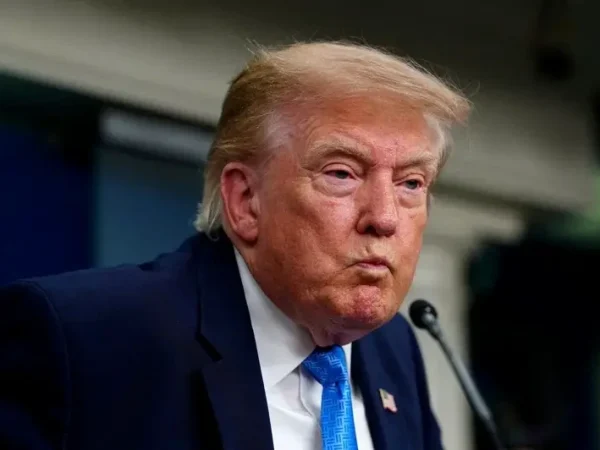
President Trump has indicated that he is in no rush to make decisions regarding a potential war with Iran, suggesting that any such determination might be deferred until next year. Meanwhile, the U.S. is evaluating options for joint airstrikes with Israel, while Iran has hit back at U.S. allegations concerning chemical weapons, dismissing the narrative as echoing the same lies used prior to the Iraq War.
In a telephone interview on the 19th, President Trump stated that he would wait until next year to decide on the next steps regarding Iran. The Iranian Foreign Ministry rejected his accusation that Tehran is developing chemical or biological weapons, sarcastically comparing the claim to former U.S. Secretary of State Colin Powell’s assertion—made years ago—that Iraq possessed weapons of mass destruction.
Although President Trump remarked last week that the likelihood of launching a new, large-scale air campaign against Iran was “quite low,” the news outlet Axios reported on the 18th that he is still considering a joint strike with Israel. However, speaking to Axios by phone while aboard Air Force One on his way back to the U.S., Trump said, “I’m in no rush to make any decisions regarding Iran. We’ll see what the situation looks like after the beginning of next year.”
Axios reports that Donald Trump is facing intense pressure from Israeli Prime Minister Benjamin Netanyahu, who is urging him to launch a decisive bombing campaign as soon as possible. The timeline Trump has suggested may indicate that he intends—in line with the advice of several aides and leaders of Persian Gulf nations—to allow more time for a naval blockade and economic pressure to take effect. However, Trump could change his mind at any moment; even if he were planning an imminent strike, he would likely not disclose it in advance. For instance, on the eve of the outbreak of the U.S.-Iran conflict this past February, he claimed that no decision had been made, even though he had already ordered the airstrikes.
Delaying a decision could also mean that, should Iran fail to concede by the end of the year, Trump wants to ensure there is sufficient time to take military action before a new Congress—controlled by the Democratic Party—fully establishes its footing. Discussions on this matter are likely to intensify now that Trump has returned from his trip to Asia.
Axios notes that any U.S. military action against Iran would involve Israel and could include airstrikes on suspected Iranian nuclear facilities—such as those at “Pickaxe Mountain”—as well as bridges, power plants, and both military and civilian leadership targets. Two individuals familiar with the matter revealed that the White House has tasked the Pentagon and intelligence experts with assessing how Iran might respond to various U.S. strike scenarios. They have also inquired whether any options exist that could prevent Iran from launching devastating retaliatory attacks against the oil and gas infrastructure of Persian Gulf nations.
According to a CBS News report, Trump claimed on the 18th that because the U.S. has “blocked” Iran’s path to acquiring nuclear weapons, there are “signs” that Iran is now seeking to develop chemical or biological weapons. Speaking to a Fox News reporter in Shenzhen, China, he stated: “Because we’ve blocked their path to nuclear weapons, they are now looking into poison gas and biological weapons.”
In response, Iranian Foreign Ministry spokesperson Esmaeil Baqaei wrote on X: “After hyping up the ‘Iranian nuclear threat,’ U.S. officials are now claiming there are signs that Iran is developing biological or chemical weapons! The accusations keep shifting, yet the underlying narrative feels disturbingly familiar. It seems the world is once again expected to suffer from collective amnesia.”
Referencing the 2003 U.S. invasion of Iraq—justified by allegations that the Saddam Hussein regime was developing weapons of mass destruction—Baqaei wrote: “Do U.S. officials truly believe the world has forgotten Colin Powell’s infamous 2003 address to the UN Security Council? He held up a small vial, supposedly representing the threat posed by Iraq’s weapons of mass destruction—a moment that has since become a symbol of one of the most consequential intelligence failures and acts of political deception in modern history.”
He further noted: “Now, we are faced with disturbing new allegations and a narrative that appears to be following the very same playbook of deception.”