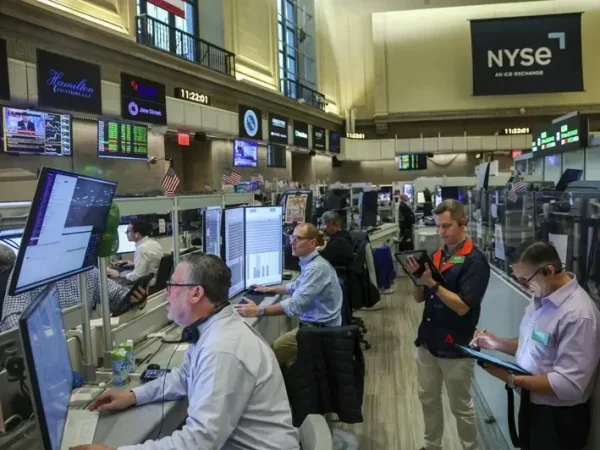
U.S. stocks saw mixed results on Tuesday. A sharp decline in the Philadelphia Semiconductor Index weighed on the broader tech sector, with Nvidia and AMD suffering significant losses. Meanwhile, the market digested news regarding potential new tariffs from Trump and awaited the release of PCE inflation data.
The S&P 500 closed lower on Tuesday (the 24th), while the Nasdaq fell by more than 1%. The Philadelphia Semiconductor Index plunged 7.8% as a sell-off in chip stocks dragged down the market. Nvidia and other AI-related equities gave back some of the gains made the previous day, as investors braced for potential new U.S. tariff measures.
The Dow Jones Industrial Average rose 423.39 points (0.85%) to close at 50,018.70. The S&P 500 fell 36.08 points (0.50%) to close at 7,201.09, and the Nasdaq dropped 356.02 points (1.48%) to close at 23,733.54.
The Philadelphia Semiconductor Index plunged 755.55 points, or 7.88%, to close at 8,832.50.
Nvidia Gives Back Some Gains; Tech Stocks Weaken
Nvidia shares fell 5.9%, reversing the previous day’s stunning 31% surge. Investors are weighing the implications of Jensen Huang’s return to the CEO position on Monday, with the market harboring concerns regarding the political and governance risks associated with his comeback. As the Nvidia board continues to investigate whether Huang was targeted by foreign espionage, the initial excitement surrounding his reinstatement has faded.
The technology sector fell 2.8%, leading the decline among the S&P 500 sectors. TSMC’s ADRs dropped approximately 4%, while AMD shares tumbled nearly 9%.
Amazon, Meta, and Alphabet all saw declines; Apple and Microsoft were the only two gainers among the “Magnificent Seven” tech stocks.
Shares of the newly listed Anthropic closed down 6.5% at $81.90, falling below their $83 IPO price.
Concerns regarding AI costs, sustainability, valuations, and potential regulation have returned to the forefront, triggering a fresh wave of selling.
“My head is spinning,” said Mary Ann Bartels, Chief Investment Strategist at Sanctuary Wealth. “Given the extreme volatility in the stock market over the past few sessions, I’m not sure there’s anyone on Wall Street who doesn’t feel the same way.”
Gene Goldman, Chief Investment Officer at Cetera Financial Group, stated that some profit-taking was to be expected following the largest gains seen in months. Ultimately, a single piece of news cannot fully resolve investor doubts regarding the AI trade. “Last week’s pullback presents a buying opportunity for long-term investors, though we still anticipate that market movements could remain highly volatile for some time.”
The CBOE Volatility Index (VIX)—Wall Street’s primary “fear gauge”—is hovering around 26, signaling rising market stress.
News of New Tariffs Intensifies Selling Pressure
Adding to the selling pressure, traders are digesting reports that the Trump administration is preparing to roll out new tariff measures. Citing three individuals familiar with the matter, Reuters reported that the administration is poised to release the findings of an investigation into alleged industrial overcapacity across 16 major trading partners; this is expected to lead to the imposition of new import tariffs on a wide range of goods.
According to a Bloomberg report, the upcoming round of U.S. tariffs will reportedly not exceed levels established in existing trade agreements with these nations. Furthermore, the measures will not be applied uniformly; instead, different tariff rates will be levied against different economies.
Charles Lemonides, a portfolio manager at ValueWorks LLC, remarked: “Given the significant uncertainty surrounding AI, the last thing Wall Street wants to hear right now is news about a trade war.”
Awaiting Inflation Data
Goldman Sachs stated that new tariffs would introduce market uncertainty, while investors are also exercising caution ahead of Wednesday’s release of the Personal Consumption Expenditures (PCE) price index.
The PCE price index is a key inflation gauge monitored by the Federal Reserve. According to the CME Group’s FedWatch tool, traders in the federal funds rate futures market currently assign a 97% probability to a Federal Reserve rate hike in December, and a 66% chance of another hike in January.
Retail stocks rallied. Abercrombie & Fitch surged 19.7%, while Dollar Tree rose 11.2%; both companies raised their earnings forecasts.
Healthcare stocks also advanced, leading gains within the S&P 500 index.
A survey by The Conference Board showed that U.S. consumer confidence rose to its highest level in nearly two years in November. Following the midterm elections in November, consumers have become more optimistic regarding the job market and the overall economic outlook.