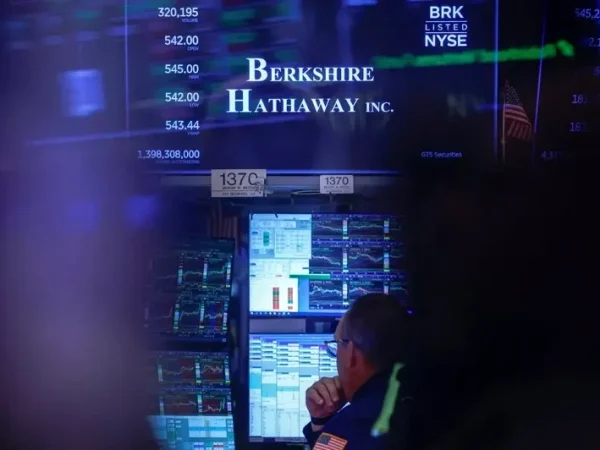
In the third quarter, Berkshire Hathaway increased its stakes in airline and homebuilder stocks while trimming its holdings in the financial sector. The company also executed a record $9.6 billion in share buybacks; yet, its cash pile continued to grow. Market observers are now closely watching how the new CEO, Greg Abel, might deploy this massive pool of capital.
Berkshire Hathaway—long helmed by the “Oracle of Omaha,” Warren Buffett—has disclosed its latest portfolio adjustments. During the third quarter, the firm added to its positions in Delta Air Lines and U.S. homebuilders, continued to reduce its exposure to financial stocks, and spent a record $9.6 billion on share repurchases. Despite these moves, the company’s cash reserves climbed to $377.4 billion, sparking keen interest in how new CEO Greg Abel intends to utilize these substantial funds.
According to reports from Bloomberg and The Wall Street Journal, a regulatory filing submitted by Berkshire on Monday revealed that the company purchased over 7 million shares of Delta Air Lines last quarter, bringing its stake to 9.8%—a position valued at approximately $5.4 billion as of the end of September. Berkshire’s relationship with the airline industry has been marked by a series of entries and exits over the years; the firm reinvested in Delta Air Lines earlier this year.
The residential housing market has also been a key area for increased investment. Berkshire Hathaway acquired over 13 million shares of homebuilder Lennar and also holds shares in its peer, D.R. Horton. Furthermore, the company completed an all-cash acquisition of Taylor Morrison for approximately $6.8 billion, expanding its footprint in the U.S. residential housing sector.
Conversely, Berkshire has trimmed its holdings in financial stocks. It sold more than 27 million shares of Bank of America (BofA), reducing its stake to 6.5%—a continuation of the divestment trend seen throughout 2024. Additionally, it sold off more than half of its position in Capital One Financial, while also reducing its stakes in network infrastructure services provider VeriSign, steel producer Nucor, and supermarket chain Kroger.
The majority of Berkshire’s holdings remained unchanged; its largest positions include Alphabet, American Express, Apple, Bank of America, and Coca-Cola.
Overall, in the third quarter, Berkshire purchased approximately $2.4 billion worth of stocks and sold about $2.8 billion, resulting in a net sale of $426 million. Even with significant share buybacks, the company’s cash position increased compared to the previous quarter. After accounting for $20.5 billion in unsettled U.S. Treasury bill transactions, its cash holdings stood at approximately $357 billion.
Greg Abel, who succeeded Warren Buffett as CEO this year, has already spearheaded deals worth billions of dollars and extended the company’s investment reach into artificial intelligence. In addition to a $10 billion investment supporting the AI operations of Alphabet—Google’s parent company—Berkshire has also invested in Bending Spoons, an Italian firm that leverages AI to transform existing businesses. Bending Spoons disclosed last month that Berkshire holds a 4% stake in the company.
However, some shareholders argue that, aside from the Alphabet investment and share buybacks, overall investment activity this year has been lackluster, making it difficult to discern Abel’s personal style in managing the investment portfolio.
Darren Pollock, a portfolio manager at Cheviot Value Management, noted that as a Berkshire shareholder, he still cannot clearly gauge how Abel intends to steer the company’s investment strategy.
Berkshire’s Class A shares have risen 19% year-to-date, outperforming the S&P 500’s 8.3% gain. In recent weeks, as concerns have mounted regarding the frenzy surrounding AI infrastructure, investors have increasingly turned to Berkshire as a safe haven.